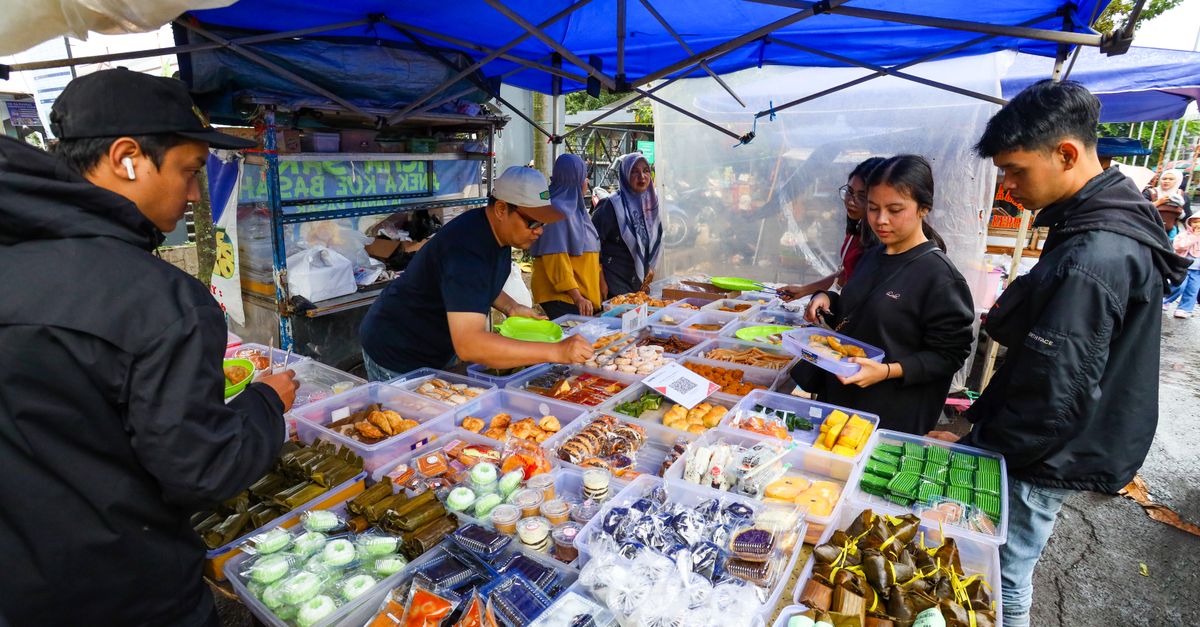
She Digs Through the Pasar at Dawn. A Reseller Lists Her Jacket by Lunch.
Bandung's preloved sellers do the sweaty work of thrifting at the pasar. Resellers scrape their photos and sell the same jackets on Shopee at double, without touching a single rack.

The jacket costs her nothing but time, sweat, and a 5 a.m. start. She digs through the piles at the pasar loak, hunts for the good denim and the vintage windbreakers, washes them, steams them, and shoots them in decent light. Then she posts. Within hours, the same photo is live on Shopee, a different seller's name on it, the price doubled.
The labor is hers. The listing isn't.
Bandung has built a real reputation on secondhand clothing, and a whole generation sells preloved as a side income or a full one. The actual work is physical. You bale-dive, you haggle, you lose money on the pieces that don't move, and you build a feed people trust. None of that transfers when someone right-clicks your photos.
Resellers don't need the rack. They need your camera roll. They lift the images, write a cleaner caption, and ride the search traffic Shopee rewards. Buyers see a cheaper-looking storefront or a bigger shop with more reviews, and they click there instead. The original seller, the one who actually touched the fabric, gets nothing.
The platform pays the copy, not the source
There's no verification that the person listing the jacket owns the jacket. On a marketplace built for scale, the system can't tell a thrifter from a screenshot. What it can measure is price, shipping speed, and ad spend, and bigger resellers win all three. Smaller sellers either match a price they can't afford or watch their own stock sell under someone else's badge.
Platform complaint tools exist, but they move slowly, and secondhand stock is one-of-one. By the time a report gets looked at, the real jacket is sold and the fake listing has moved to the next scraped photo. Reporting becomes unpaid work on top of the sourcing.
Some sellers try watermarks. Resellers crop them or run them through an app that cleans them out. Some switch to video-only, which kills their reach, because the feed favors the formats that are easiest to copy. Every defense costs time, and time is the only margin a small preloved seller has.
What's left to protect
What survives is relationships. The sellers who keep eating are the ones whose buyers message them directly, who run closed groups, who do live sales where you can see the hands holding the item. That's harder to fake, but it's also slower to grow, and it leaves the search-driven volume to whoever scrapes fastest.
So the person doing the sweaty part of the economy, the one who knows which pile holds the good stuff, ends up subsidizing the person with a laptop and an upload button. The pasar opens at dawn. The theft clears by lunch, and the receipt lands in someone else's account.