China Was Dropped as Financier in 2023. The 178 Families Cleared Off the Alignment Are a 2025 Line Item.
Manila walked away from Chinese money for the Mindanao Railway before a peso was drawn. The government still spent ₱148 million to move 178 families for a line that has yet to be built.


The Mindanao Railway Phase 1 is a roughly 100-kilometer commuter line meant to link Tagum, Davao and Digos across eight stations. The NEDA ICC-Cabinet Committee approved an increased cost of ₱82.9 billion for the Tagum-Davao-Digos project on July 10, 2019, after the line had earlier been pegged at ₱35.9 billion in 2017. Loan applications were later submitted to China's Export-Import Bank, and the line never left the pre-construction stage.
Here is the part that did not stall on paper but never got moving in the ground. In May 2022 the Department of Finance told China Eximbank that the submitted loan applications were valid only until May 31, 2022 and would be automatically withdrawn if not approved by then. The ₱83-billion Tagum-Davao-Digos segment failed to proceed after China was unable to submit a shortlist of contractors for the design-build contract.
No loan was drawn, but the money still moved
In a letter dated September 22, 2023 to Chinese Ambassador Huang Xilian, the DOF said the government was "no longer inclined to pursue the Chinese ODA financing" for the segment. In late October 2023, Transportation Secretary Jaime Bautista confirmed that China had been dropped as financier for three rail projects, the Mindanao Railway Phase 1, the PNR South Long Haul and the Subic-Clark Railway. No Chinese loan agreement for the Mindanao line was ever signed or disbursed, so there is no drawn balance, no commitment fee, and no debt service arising from it. That is the clean part.
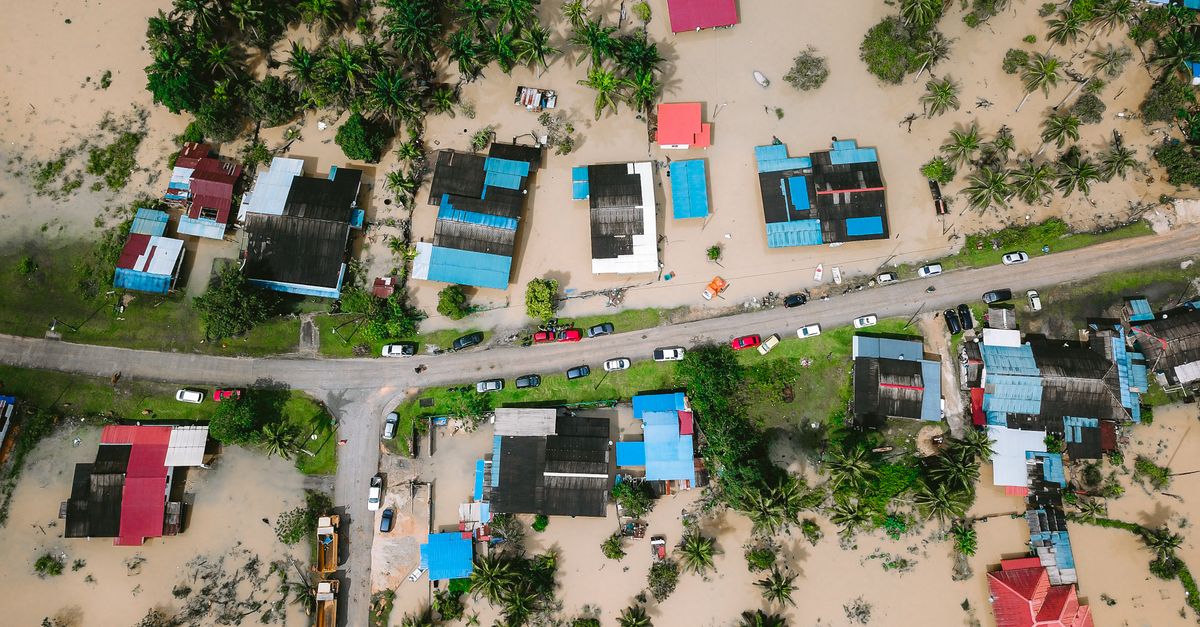
The unclean part is the alignment itself. After the Chinese financing was dropped, DOTr accelerated right-of-way acquisition and released roughly ₱148 million to relocate around 178 families from the route to the newly developed "Tagum Train Village." The government is spending real money to move real households for a line that, years after the first loan talks, still exists mostly as a plan.
Who was the driver, and who is left holding the change
Read this as a system, not a single villain. Chinese state lending came in with a build-through-our-lender model, then Eximbank never advanced a contractor shortlist and let the loan window close. Filipino agencies later pushed right-of-way acquisition and began relocating families under the Build Better More program, against a project whose financing had already collapsed. Both sides moved the deal to the edge, and the cost of the reshuffle lands on people who live along the route.
When a project like this drags, the story often gets softened into talk of ordinary delays and shifting financing conditions, and it is worth naming that framing rather than swallowing it. Some slippage on a build this size is normal. But clearing an alignment and moving 178 households while the money and the contractor remain undecided is a specific kind of exposure, and vague language about conditions does not tell you who signs off on relocating families before construction is locked.
In a July 2025 interview, MinDA Assistant Secretary Romeo Montenegro said the project had faced multiple setbacks while the government explored private-sector partnerships. The receipts to demand are plain. What each relocated household was promised, and whether anyone attached enforcement to it. Whether the private-sector financing DOTr says it is chasing reaches construction, or just keeps the alignment reserved. A rail line that never carried a passenger can still empty a barangay, and the 178 families being moved to the Tagum Train Village are paying that price for a station that has yet to be built.