The Ribbon Says Finished. The Loan Terms Decide Who Collects for Years to Come.
When a PRC-financed rail or expressway reaches its warranty phase, the fine print can hand tolling and upkeep to the same builder Beijing bankrolled. 'Completed' rarely means handed over.

Picture the ceremony every big road or rail project ends on: a ribbon, a motorcade, the word "delivered" in every press release. The risk that outlives the photos sits in the fine print, where an operations-and-maintenance contract can keep the same contractor in control of tolling, upkeep, and repairs for years after the last slab is poured.
So "completed" would not mean handed over. It would mean the meter switches on for the party that already got paid to build it.
This is a pattern worth watching rather than a segment already running, and the Philippine record shows why. In October 2023 the government confirmed it had dropped Chinese financing for three flagship railways, the Subic–Clark line, the PNR South Long Haul to Bicol, and the Mindanao Railway, after Beijing did not move forward on the loan applications. Transport officials said financing was treated as effectively cancelled once China failed to submit a shortlist of contractors, so those lines never reached a completion-and-warranty stage at all.
Who collects after the last slab is poured
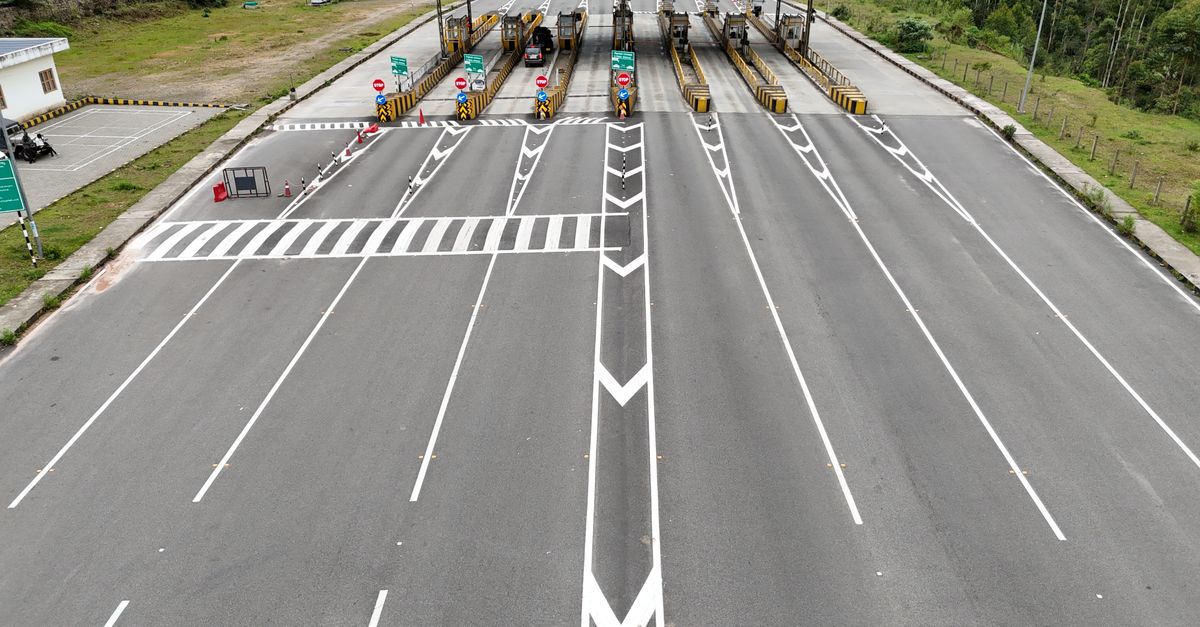
Construction is the visible part, the cranes and the loan drawdowns and the groundbreaking shots. The quieter money sits in the years after, when every vehicle passing a booth or every commuter tapping through a turnstile pays into a revenue stream that an O&M contract can route back to the operator.
PRC infrastructure lending to the Philippines has typically flowed through the Export-Import Bank of China on tied-aid terms carrying roughly 2 to 3 percent interest with 20-year maturities and 7-year grace periods. The Chico River Pump Irrigation project, the Kaliwa Dam loan, and the US$219-million PNR South Long Haul project-management-consultancy loan all ran at 2 percent, while the older 2004 Northrail loan carried 3 percent, and China proposed about 3 percent for PNR Bicol before negotiations moved toward 2.5 percent. That maturity is the length of the debt, not a maintenance concession, but it sets the horizon over which the country stays bound to the deal.
The local machinery makes any such arrangement work. A DPWH or DOTr counterpart approves the concession, an LGU clears the right-of-way, and a financing package written years earlier can decide that the safest hands for upkeep are the hands that laid the foundation. Nobody in that chain is a passive victim of "global demand," and Beijing is not a passive lender either, because Chinese-linked capital exports the whole package, cement to concession, and Filipino gatekeepers weigh the terms.
The warranty that never really transfers
Warranty phases are supposed to protect the public: if the deck cracks or the signaling fails, the builder fixes it on their dime. Tie that warranty to a long O&M deal and the contractor holds both the obligation and the revenue, so the incentive to disclose a defect early competes with the incentive to keep the tolls clean and the audits quiet.
Advocacy groups tracking Chinese loans have flagged the deeper lock: proprietary technology on the trains, imported control systems, and maintenance manuals only the original contractor can execute. A local firm cannot underbid a rival for upkeep when only one company holds the diagnostic software.
That is not corruption in the crude sense, though side payments trail these deals often enough. It is a contract structure that makes dependence look like continuity of service.
What the commuter and the taxpayer actually pay
The rider crossing the province, the trucker paying at the plaza, the household whose taxes backstop the sovereign guarantee, all of them would fund a system where the completion date changed nothing about who profits. The debt sits on the national books in dollars, the tolls clear to an operator abroad, and the review of whether the terms were fair happens, if it happens, after the concession runs half its length.
So ask the plain question at the next ribbon-cutting: after the last slab is poured, who collects the toll, who bills for the spare part, and for how many years. If the answer is the same name on the construction contract, the project was never finished. It was leased back to its builder, and the public signed the check.