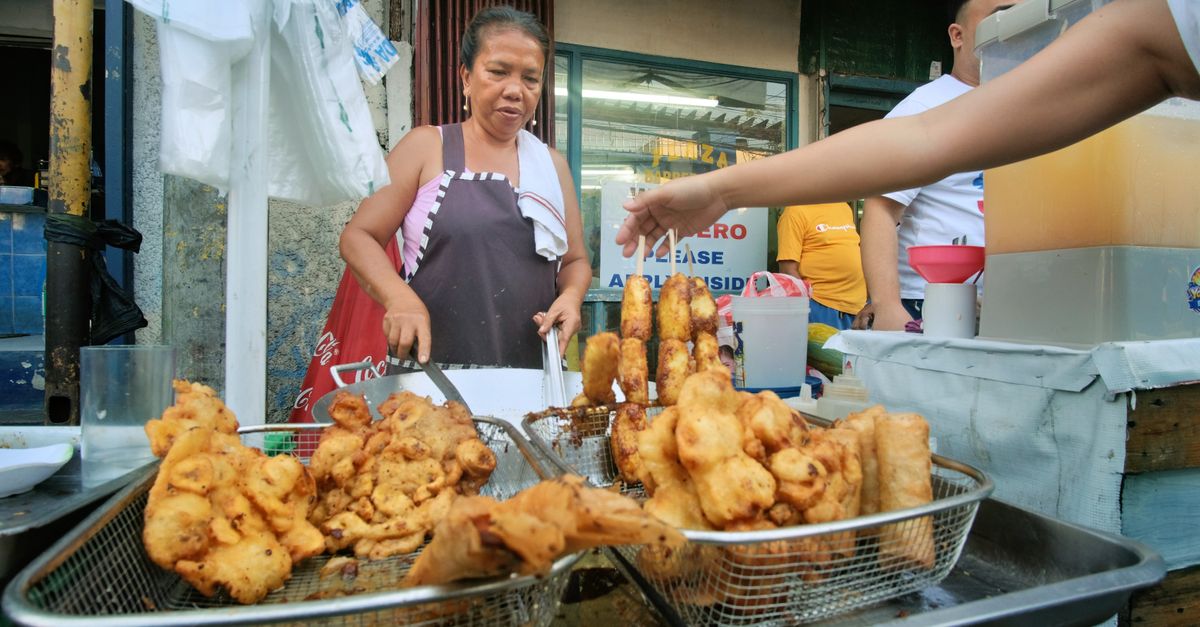
The Warteg Scans Your QR in Seconds. The Man Who Ate Here for 20 Years Counts Out Coins.
Jakarta's street kitchens are going cashless to survive. The older regulars who kept the burner lit can't scan, and the counter is quietly sorting who still belongs.

A warteg in Jakarta now takes payment faster than it serves nasi. Point the phone at the sticker taped by the rice display, hear the chime, done. QRIS made the transaction clean and the change drawer optional.
The regular who ate here through two administrations still pulls coins from his shirt pocket. He counts them out on the counter while the line behind him watches a screen light up green.
The sticker is not the problem. The line behind it is.
Vendors did not switch to QRIS to be modern. They switched because fewer people carry cash, because the supplier now wants a transfer, because a lost thousand-rupiah note is real money at a stall running on margins this thin.
The tax office likes the record. The bank likes the account. The vendor likes not chasing exact change during the lunch rush. Every reason is sound, and none of them was written with the old man in mind.
He does not have the app. He has a phone that calls and texts, a pension that arrives in cash, and eyes that no longer read a screen at arm's length. For years he was the reliable customer, the one who came at the same hour whether the stall was full or empty.
Cashless has a class filter, and nobody labeled it that way.
The warteg was cheap on purpose. It fed construction crews, becak drivers, retirees, the people malls price out. Cash was the great equalizer at that counter. You needed rupiah, not a bank, not a smartphone, not a data plan that stays topped up.
QRIS moves the entry point behind a login. Advocacy groups tracking digital payments note that older Indonesians and low-income households sit furthest from the app economy, the same people who kept neighborhood kitchens alive when nobody else did.
The vendor feels it before anyone writes it down. The younger crowd pays in one tap and leaves. The old regulars come less, then not at all, embarrassed to hold up a line for a transaction the stall used to handle without blinking.
What gets priced out is not the food. It's the table it was cooked for.
A warteg that only takes QRIS is still cheap by the numbers. The price of nasi didn't move. The barrier moved, from your wallet to your phone, and that shift does the sorting on its own.
The vendor did not choose to exclude anyone. The system handed her a sticker and a lower cash count, and the customers who couldn't scan simply stopped showing up. No sign on the door. No policy.
The old man walks to the next stall, then the one after, looking for a burner that still takes coins. The wartegs that keep a cash drawer are the ones deciding, on purpose, who still gets to eat here. That decision costs them a supplier transfer and a cleaner ledger, and they pay it in coins, one regular at a time.