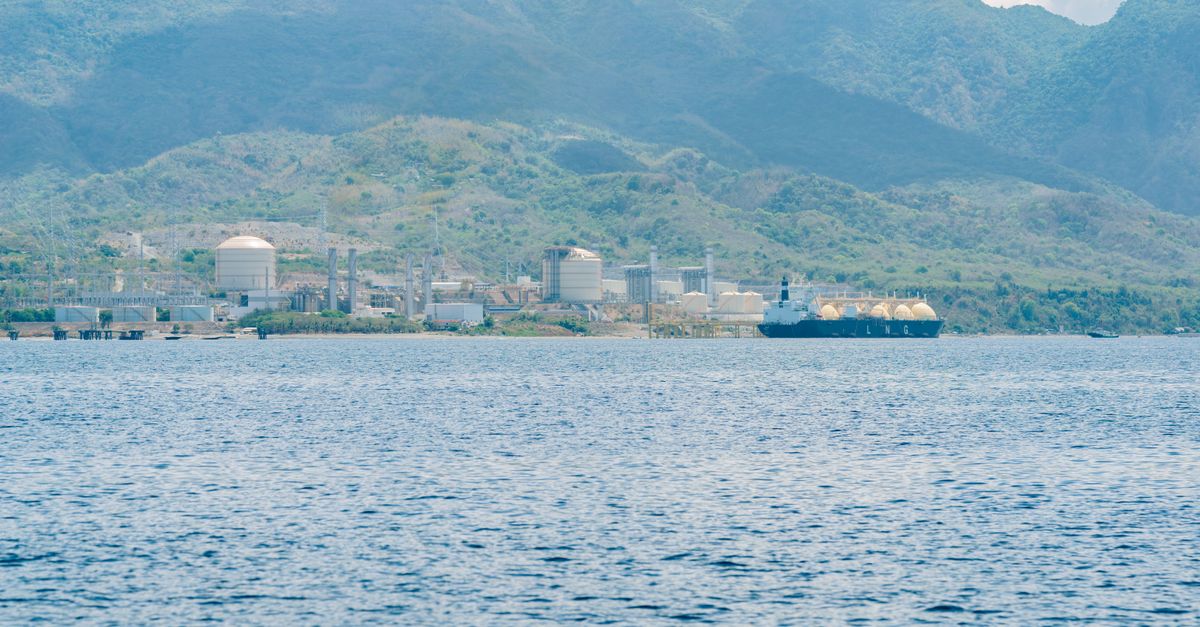
One Tanker Turns Around Near Hormuz. Batangas Reprices Before the Cargo Ever Docks.
A single rerouting off the Gulf moves depot prices weeks ahead of the pump, and the Malampaya restart still leaves Luzon leaning on imported diesel when the grid stumbles.


A tanker changes course somewhere near the Strait of Hormuz, and the number on a Batangas depot invoice moves before that cargo touches Philippine water. That is not a coincidence, and it is not the pump station gouging you. It is how the price gets set.
Philippine pump and depot prices track the Mean of Platts Singapore, the regional benchmark for refined products, as the Department of Energy has stated. That benchmark reprices the second traders read risk into a shipping lane. In 2026 the Gulf is tense again, insurers hike war-risk premiums, and freight rates climb because a longer route burns more fuel and more days. That cost feeds into the landed price at Batangas weeks before the diesel in your jeepney tank was ever refined.
The pump runs on a delay you don't see
Oil deregulation lets local firms adjust prices weekly, and they price against the replacement cost of the next shipment, not the one already in the tank. So when a rerouting spikes the forward market, depots pass it forward fast, and drivers eat it at the next fill.
The crude side moves too, though it plays a different role. In early July 2026, DOE Undersecretary Alessandro Sales said Dubai crude had fallen below the government's $80-per-barrel marker, averaging roughly $65 a barrel the previous week, and the DOE's oil monitor showed Dubai crude down about $2.40 a barrel over the June 29 to July 3 trading period, with international gasoline off about $3.20. Yet Sales has explained why the pump does not follow that path: the country imports mostly finished petroleum products, so prices peg to the Singapore benchmark, not to Dubai crude.
The proof was on the board within weeks. Diesel and kerosene pump prices still rose in the weeks of July 7 and July 14, 2026 despite easing crude, with Energy Secretary Sharon Garin announcing the weekly adjustments, because renewed Middle East volatility kept pressure on refined product prices even as the barrel eased.
The subsidy meant to cushion drivers, the Pantawid Pasada fuel cards, clears on a government timeline measured in weeks. Prices move at trading speed and relief moves at bureaucracy speed, which means the gap always opens against the people who drive for a living.
Malampaya buys time, not immunity
Luzon's grid leans hard on the Malampaya gas field to run the plants that keep Metro Manila lit. Every restart and extension of that field has been sold as energy security, and the deepwater development off Palawan does keep a large slice of generation domestic and off the import bill.
The catch sits in the backup. When gas plants trip, run short, or draw down faster than expected, operators switch to imported diesel to hold the grid, and that diesel prices off the same regional product market a Hormuz scare just moved. Malampaya covers the base, but the swing capacity still rides the imported barrel.
So a tanker turning around near the Strait touches two things you feel: the pump price that squeezes transport workers and small business, and the fuel that props up Luzon generation on a bad grid day. Both routes run through refined product landed at our depots.
Who set this exposure
The Department of Energy has pushed longer Malampaya life and more renewables into the mix, and both help. Yet the grid still calls on diesel for backup, and no auction-awarded solar farm helps if it can't schedule an interconnection for years. Import dependence stays because the domestic buffer never fully arrived.
Chinese-linked demand keeps global oil markets tight and shapes the Gulf's export logic, and that backdrop matters. Closer to home, the pricing machinery, the deregulation rules, the subsidy delays, and a grid that keeps a diesel crutch, all sit with local agencies and local firms who set the terms.
Watch the depot invoices, not the pump signage, if you want the early warning. By the time the Batangas landed cost moves, the fare hike, the delivery surcharge, and the next brownout advisory are already loading. The barrel got dearer offshore, and the bill comes due here.