A Tanker Leaves the Gulf in October. Your December Meralco Bill Reads the Manifest.
Malampaya is thinning and Batangas now takes imported LNG. That means a shipping schedule out of the Gulf, priced in dollars, feeds into the rate a Quezon City renter pays.


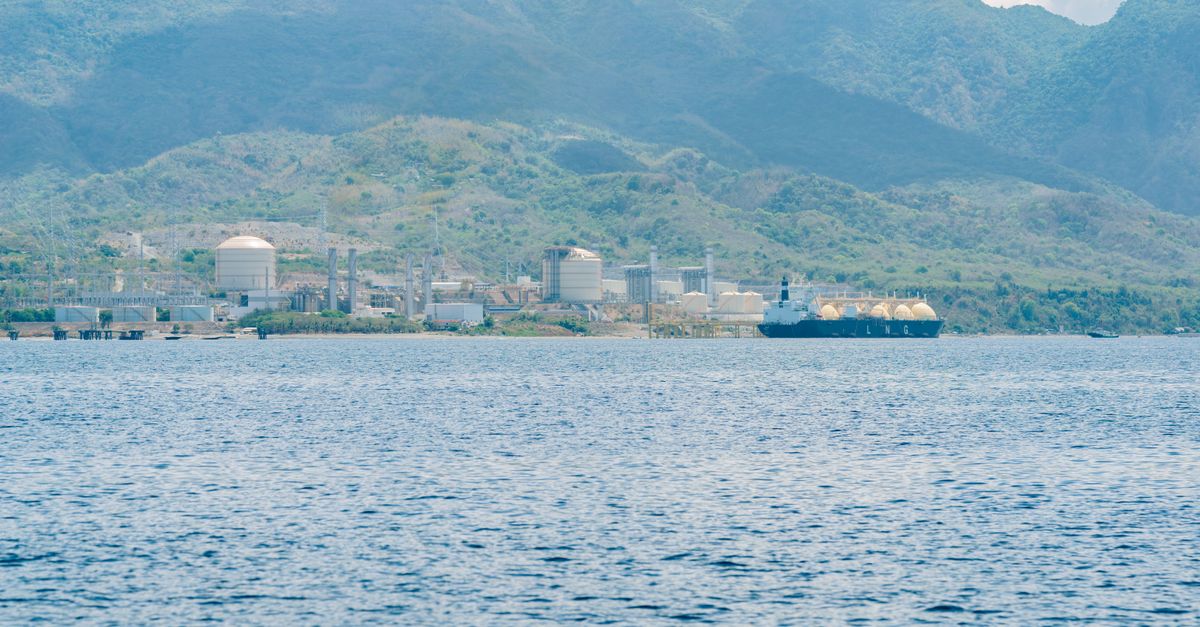
Malampaya gave Luzon more than two decades of gas that came out of Palawan waters, priced in a way nobody in Metro Manila ever had to think about. DOE estimates had the field's reserves running out around the first quarter of 2027, so the Philippines started importing liquefied natural gas before that, taking its first LNG cargo in April 2023 at the AG&P Philippines LNG import terminal in Batangas Bay. In January 2026, President Marcos announced the Malampaya East-1 discovery, the country's first gas find in over a decade, estimated at about 98 billion cubic feet and sitting roughly 5 km east of the existing field. That extends Malampaya's life, but the plants that once ran purely on it now lean on gas offloaded at Batangas. The molecule still spins the same turbine. Where a growing share of it comes from, and what it costs, changed completely.
Here is the chain nobody consented to. A tanker loads at a terminal somewhere in the Gulf, sails for weeks, and prices its cargo against a benchmark set in dollars. By the time that gas becomes electricity in Quezon City, the rate has absorbed the shipping date, the global spot price, and the peso-dollar rate at settlement. A renter in a condo off Katipunan pays the tail end of a transaction decided an ocean away.
The contract is the trap, not the fuel
LNG supply often moves on long fixed deals, and that sounds like stability until you read how the price indexes. In March 2025, Vitol Asia signed a 10-year LNG sale and purchase agreement with LNGPH, the integrated LNG power facilities of South Premiere Power Corp. and Excellent Energy Resources, for up to 0.8 million tonnes a year starting in 2025. Deals like these can peg gas to oil or to a dollar benchmark, so when the Gulf gets jumpy or the peso slides, the cost rides along. You locked in a supplier, not a price.
The Energy Regulatory Commission has not let these costs pass through unchecked. In February 2024, the ERC ruled that Meralco needed its clearance before passing on higher LNG-related generation charges from its contracted producers, pegged at P0.4552 per kilowatt-hour. The ERC later approved the gas-supplier pass-through charges, with collection starting in October 2024. The review happens, but once it clears, the dollar-indexed swing still lands on the household, with a lag.
Energy security got outsourced to a shipping lane
Shifting from a domestic field to imports is a real policy choice, and the Department of Energy has leaned on LNG to keep Luzon's lights on as Malampaya ages. The trade-off is exposure. A domestic field insulated the grid from Gulf politics and currency moves in a way a tanker schedule never will, so disruptions from Hormuz to the dollar desk now have a line to the meter.
There is a cleaner-energy argument for faster solar and wind precisely because it prices in pesos and sits onshore, but auctions keep awarding capacity the transmission lines can't yet carry. Until that gap closes, imported gas sets the marginal price, and the marginal price sets your bill.
So the next time the rate jumps, read it for what it is. A cargo priced in dollars, a contract you never signed, a charge the ERC cleared, and a studio in Quezon City eating the difference between the day the tanker left the Gulf and the day the bill came due.