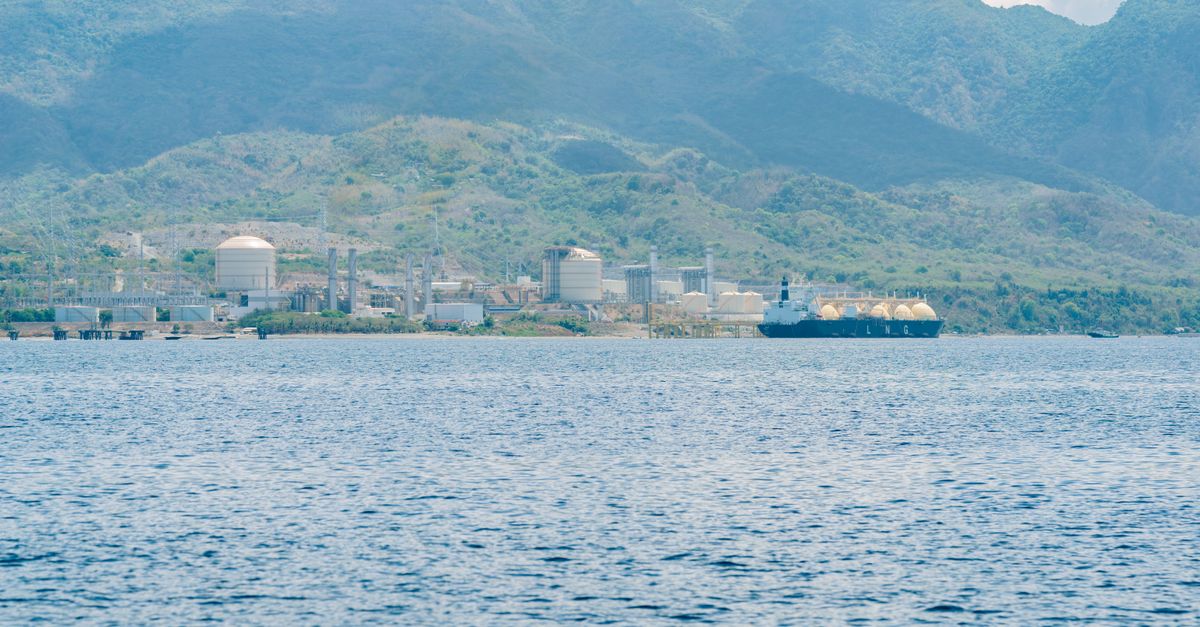
Malampaya's Last Molecules Run Thin. Your Meralco Bill Reads the Gulf Instead.
Luzon is trading a declining home gas field for imported LNG priced off the same benchmarks that already move the Cavite pump. The next spot-cargo spike lands on the smallest payers.


Malampaya has powered a big slice of Luzon for two decades, and it is running down with no firm replacement wired in behind it. So the grid leans harder on imported liquefied natural gas, and that cargo gets priced off Gulf and Asian spot benchmarks instead of a fixed domestic field.
Those are the same benchmarks that already push diesel up at the Cavite pump every few weeks. The difference is that a jeepney driver watches diesel climb in real time, while a gas-fired power contract buries the spike inside a bill that lands a month later.
Who sits at the front of the line
Spot LNG is the expensive, volatile way to buy gas, bought cargo by cargo when long-term supply falls short. When a conflict tightens the Gulf or a cold snap bids Asia up, the spot price jumps, and a plant that has to run anyway buys at whatever the market quotes that week.
That cost does not vanish. It moves through the generation charge, the single biggest line on a Meralco bill, and the regulator lets it pass through to the people plugged in at the end.
Big factories can hedge, switch fuels, or negotiate their own supply deals. A renter in a Quezon City studio with one aircon and a rice cooker cannot hedge anything. She pays the war-rate molecule at the same per-kilowatt-hour rate as everyone else, and it eats a larger share of a smaller paycheck.
The replacement that keeps slipping
Import terminals are built and more gas plants are planned, so the official answer is that supply is covered. A permit to import is not the same as cheap, steady gas, because an import-heavy mix hands price-setting to a market Manila does not control.
Solar and wind would blunt this, since their fuel is free once the panels are up. The connection keeps lagging: auctions award megawatts, the transmission line to carry them shows up years later, and the grid keeps buying gas in the gap. Every delayed line is another month the spot market gets to set your rate.
None of this reads as a single villain. It is a chain of choices, a field allowed to deplete without a signed successor, renewable projects stranded without wires, and a pass-through rule that treats a cargo bought during a Gulf crisis exactly like a cargo bought in calm water.
The bill does the sorting
When the next spike comes, and the pattern says it will, the sorting happens quietly. The mall keeps its lights, the plant keeps its line, and the pass-through does the rest.
The person who absorbs it is the household that already skips the second aircon, the sari-sari store that runs one freezer, the renter who reads the bill, swears, and pays it because the alternative is the dark. They never bought a spot cargo. They just signed a connection, and the connection came with the Gulf attached.