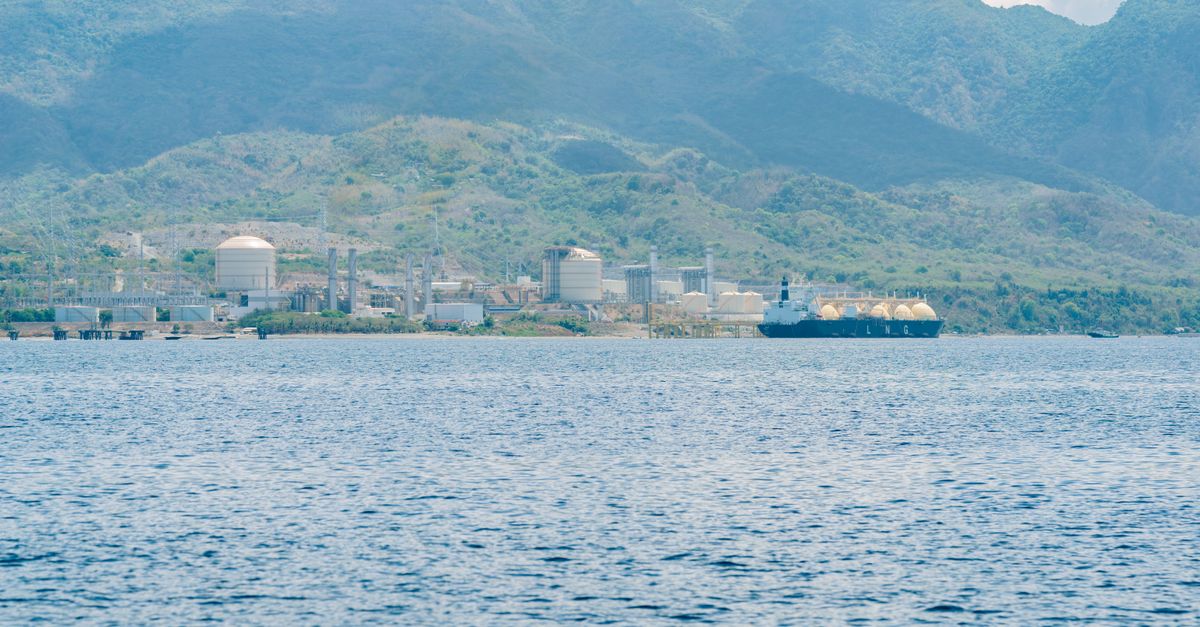
Liguasan Gas Hits the Pipeline in 2027. Cotabato Pumps Will Read Dubai Anyway.
Bangsamoro's first commercial gas field is on track for 2027, but the royalty math and the pump-price formula already point the same way Malampaya did: outward.

The first commercial gas flow from Liguasan Marsh is being sold as a Bangsamoro turning point, with 2027 set as the year the wellheads start paying. The harder question for anyone gassing up in Cotabato City is whether any of that flow lands in the price on the pump, and the early signals point the other way.
Liguasan sits under the Bangsamoro Organic Law's wealth-sharing arithmetic, where the region gets a defined slice of national-government share from natural resources within its territory, and Manila keeps the rest. That slice is real money on paper, but it travels through the national treasury first, then back down through annual block grants and special shares, on a calendar set in Manila.
The Malampaya template nobody wants to inherit
Palawan spent two decades fighting for its 40 percent share of Malampaya royalties while the field powered Luzon plants and the bulk of revenue sat in escrow or flowed straight to the national budget. Court rulings shifted, administrations shifted, and the gas ran down before the province saw a clean accounting. The lesson for BARMM is not that the formula is unfair on its face. The lesson is that the formula is the easy part, and the disbursement, the audit trail, and the political will to release funds on time are where provinces lose.
For Bangsamoro, the additional wrinkle is that the region is younger than its revenue stream will be. The Bangsamoro government is still building the fiscal machinery to absorb a commodity windfall, from a regional treasury that can ringfence royalty income to an audit body with the teeth to chase it. Without that scaffolding, gas money behaves like disaster aid: announced fast, released slow, spent by the wrong office.
Why the Cotabato pump will not feel it
Even if every peso of BARMM's share landed on time, the diesel at a Cotabato City station would still be priced off the Mean of Platts Singapore, which tracks Dubai and Oman crude, which tracks whatever the Strait of Hormuz is doing that week. Domestic gas does not unbundle from that benchmark because the Philippines runs on an oil deregulation law that lets retailers price to import parity, and because Liguasan's output is being scoped for power generation and industrial offtake, not for the jeepney tank.
So the gas leaves the marsh, the power plants buy it, the electricity bill in Maguindanao may or may not soften depending on how the offtake contract is written, and the diesel pump keeps reading Gulf futures. The royalty is a separate envelope from the consumer price, and conflating the two is how provinces get told to be grateful while the cost of living climbs.
What BARMM can still lock in
The window to write better terms is now, before the first molecule moves. That means a regional sovereign account that ringfences royalty inflows from general appropriations, a published offtake structure that ties at least part of the gas to a discounted local power tariff for Bangsamoro distribution utilities, and a community-benefit schedule for Liguasan host barangays that does not wait for the national share to be released.
The contract terms are being drafted while the Bangsamoro Parliament is still finding its committee rhythm, and while host communities in Sultan Kudarat and Maguindanao have had little sight of the production-sharing math. If the receipts are not public before the gas flows, the receipts will not be public after.