Five Countries Want to Store Oil Across ASEAN. The Barrels Still Have to Reach a Tricycle Driver.
A regional stockpile sounds like a buffer against pump spikes. Whether it reaches a sari-sari owner depends on who pays for it and where the fuel physically sits.


DTI Secretary Cristina Roque said this month that five countries, Singapore, Indonesia, Malaysia, the Philippines and the United Arab Emirates, have agreed to or shown interest in storing oil reserves in ASEAN countries that already have the storage facilities, according to the Daily Tribune. Note that the UAE is not an ASEAN member. For a country that buys the overwhelming share of its imported crude from the Middle East, the logic is easy to follow. The hard part is tracing how a barrel in a shared reserve ever reaches the person filling a tricycle tank in Pasig.
The idea is still a proposal, not a policy. The Daily Tribune reported that the Economic Research Institute for ASEAN and East Asia was set to submit a regional oil stockpiling plan that Monday, with Roque saying the Philippines led the discussions. Nothing has been formally adopted or funded.
Who pays and who decides
A stockpile only blunts a spike if someone releases it fast and cheap during the emergency. That raises the questions the proposal has not answered. Who finances the reserve, who holds the keys, and on whose timetable does it open.
Japan shows the scale a serious buffer requires, keeping emergency reserves that cover months of consumption, split across national stocks, private-sector holdings, and joint stocks held with producing countries. A bloc-level version splits that cost and that control across capitals with different exposures. Singapore trades and refines fuel for the region. The Philippines mostly burns it. A reserve governed by consensus can stall exactly when one member needs it most, because releasing barrels to Manila means not holding them for someone else.
Where the Philippine barrels would sit
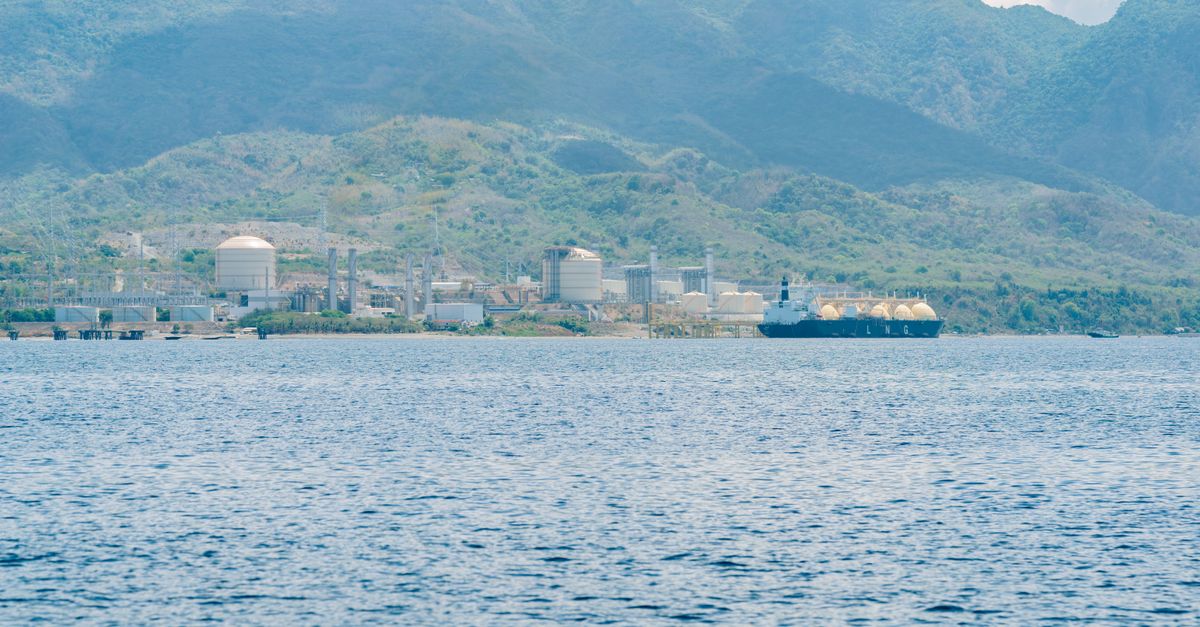
Physical geography decides whether this helps or just looks good on paper. The arrangement Roque described leans on members that already have storage, which means the Philippine share could sit in a tank farm abroad. From there it still has to be shipped, cleared, and refined before it reaches a station, which is days the market has already priced in. Keeping barrels at home instead means building the tanks, the ports, and the standing stock to fill them, and that is capital the budget has not committed.
There is also the deeper problem a reserve does not touch. By commonly cited estimates, roughly 98 percent of the country's crude oil imports come from the Middle East. A shared stockpile can smooth the worst week of a crisis, but that concentration, long tanker routes through the Strait of Hormuz feeding a grid of diesel-run jeepneys and generators, stays exactly where it is.
And the pump already moves without warning. Prices swing because deregulation passes global shocks straight to the consumer, and a driver feels it before any agency issues a statement. Pump prices have climbed on a net basis across the year, and no single weekly rollback has clawed back the run-up.
So the proposal is worth watching, not celebrating. The test is whether, during the next spike, a sari-sari owner buying a liter for her generator and a driver topping up his boundary tank see the price hold instead of jump. Until the financing, the storage, and the release rules are on paper, the reserve is a promise, and the fare box stays open at the same number.