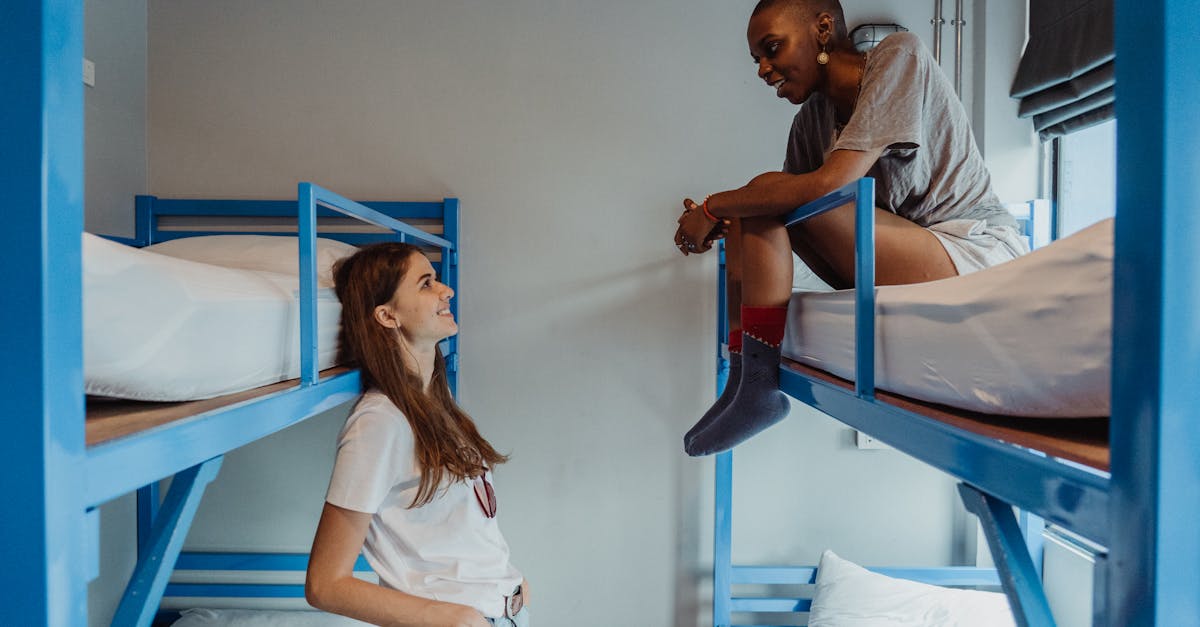
The Lease Counts the Bed, Not the Couple Sleeping in It
Manila landlords rent bunks one at a time, and couples say the arrangement leaves the empty half of the room in the landlord's hands.


You and your partner move into a room to save on rent. The landlord hands you two contracts. One bunk, one lease, one name each. The paperwork treats you like two strangers who happened to walk in together.
That is the whole trick. In Manila's bunk-style co-living setups, the bed is the unit, not the room. Price a shared room as one lease and the landlord earns for one tenancy. Split it into four bunks and the same square meters bring in four rents.
The empty bunk belongs to the landlord
The premise couples run into is simple. When one bunk goes vacant, the operator, not the remaining tenant, decides who fills it. Your partner misses a payment, gets asked to leave, or the second lease simply ends, and the empty bunk goes back on the market. You do not get a say. The room was never rented to you as a couple.
Couples find out the hard way. One partner's lease lapses, and instead of the room staying yours, someone new can be assigned to the bunk two feet away. Nothing in the setup stops it, because the bunk was sold as a product, one at a time.
Bedspace and dormitory listings cluster around business districts like Makati and Ortigas, priced per bed and marketed to young workers and students shut out of studios. A bunk runs a fraction of a full unit, which is the only reason anyone signs.
The law covers the bunk, but the protection has a threshold
Here is what the fine print does not tell you. RA 9653, the Rent Control Act of 2009, defines a residential unit to include boarding houses, dormitories, rooms, and bedspaces offered for rent, leaving out motels and hotels. Bed-by-bed rentals sit inside the law's scope, not outside it.
The catch is the ceiling. Under NHSB Resolution No. 2024-001 from the DHSUD, rent control coverage runs from January 1, 2025 to December 31, 2026, capping annual increases at 2.3% in 2025 and 1% in 2026. Those caps apply only to units renting at P10,000 or less per month, and only while the same tenant stays or renews the lease.
That last part matters for the vacated bunk. Once a bed empties and a new tenant signs, the landlord can reset the rate. The cap follows the tenant who stays, not the bed itself.
For covered units, RA 9653 also says a lessor cannot demand more than one month of advance rent and not more than two months of deposit, and rent may be raised only once a year. So the deposit stacking has a limit and the annual increase has a limit, as long as your rent clears the P10,000 line and you are the one still on the lease.
Cheaper by the bed, costlier in every other way
The savings are real and so is the catch. Privacy disappears by design. A shared bathroom, a shared kitchen counter, a curfew logged at the front desk. Some houses ban overnight guests, which means the partner whose lease ended cannot even visit the bunk they paid for last month.
The math still favors the operator. Four rents fit where one used to go, and every vacant bed can be relet, sometimes at a fresh rate to a stranger. You get a bunk, a curfew, and a room that stops being yours the week the second lease runs out. The rules that would push back are on the books. Reading them against your own lease, and checking whether your rent even falls under the cap, is the part left to you.