
Passed the Board in Manila, Hired to Bathe and Feed in Osaka
JICA-backed pipelines send licensed Filipino nurses to Japan, where the contract pays for eldercare tasks the Philippine license was supposed to clear them past.

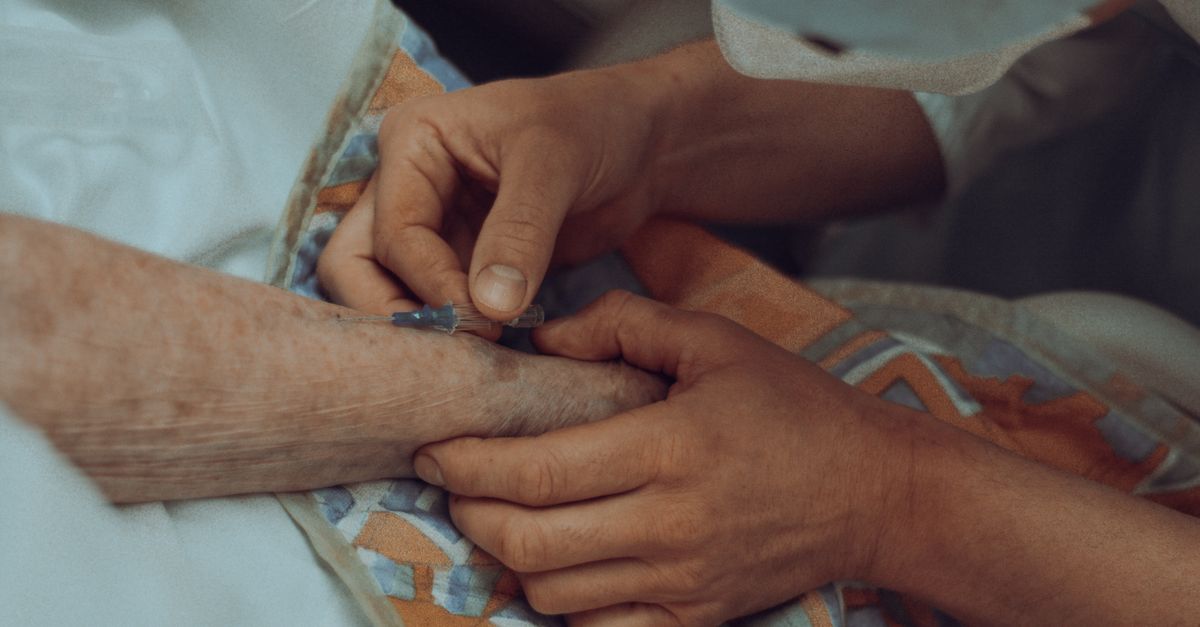
A Filipino nurse passes the board, puts in her years on a ward, then signs a visa to Japan. On paper it reads like a promotion: a stronger passport market, yen wages, a government-backed training track. On the roster, many spend their first years as assistants and trainees, bathing residents, changing diapers, logging meals, while they study for a Japanese exam. The license that took her four years certifies none of that extra.
This is the quiet math behind the eldercare pipeline. JICA-backed programs and bilateral labor schemes recruit trained Filipino nurses, then route them into roles that sit below their qualification until they clear Japan's own bar. The Japanese system reads the Philippine license as a floor, not a ceiling. Clinical nursing work as a licensed kangoshi requires passing Japan's national exam, taken in Japanese.
The credential that doesn't transfer
A nursing license is supposed to mean something portable. You finished a four-year BSN, cleared the PRC board, ran IV lines, managed a floor. Under JPEPA, the main bilateral route, you also need an active PRC license and at least three years of hospital, clinic, or health center experience just to qualify as a candidate.
Then you arrive, and the Japanese employer reads all of that as a starting point. Nurse candidates go to Japan as trainees and work at Japanese hospitals while preparing for the national exam. Pass it, and you convert to a licensed nurse's role. Until then, you are a candidate on candidate terms.
The language barrier is real, and nobody pretends otherwise. The exam is in Japanese, and foreign candidates have long cleared it at low rates. Many never pass. They stay in assistant work, or go home. The license goes stale in a drawer.
What the contract actually buys
Japan has an aging population and a shortage of hands to lift, feed, and clean. The Philippines has nurses it trained and cannot employ at a living wage. The two gaps meet in a contract, and the contract is written in Japan's favor.
The recruitment pitch leans on the nursing credential to attract applicants, then prices the first years as support labor. You are recruited as a professional and deployed, for a stretch, as something less. The difference between those two words is a salary band, a career ceiling, and years of your working life.
Back home, the sending side treats every departure as a win. Another worker placed, another remittance stream opened, another line in the deployment figures. The license did its job: it got her hired abroad. What it bought her once she landed is a different document entirely.
The gap nobody signs for
There is a version of this that works. Clear the Japanese exam, convert to a nursing contract, earn what a nurse earns. Some do. The pipeline points at them in its brochures.
For the rest, the arithmetic is plain. A four-year degree, a board exam, three years on a ward, and the first paychecks abroad cover wiping and lifting at a candidate's rate while the clock runs on an exam many will not pass. The employer gets a nurse's training for less than a nurse's wage. The worker gets a visa, a plane ticket, and a credential that counts for less the moment she lands.


