
KL Sells the Cheaper Kilowatt-Hour. Palawan Fronts the Priciest Wire in the Study.
The ASEAN grid cable to the Philippines lands in Palawan, not Luzon. Read who fronts the transmission cost, and why the JICA study prices this line dearer than the links it compared it to.

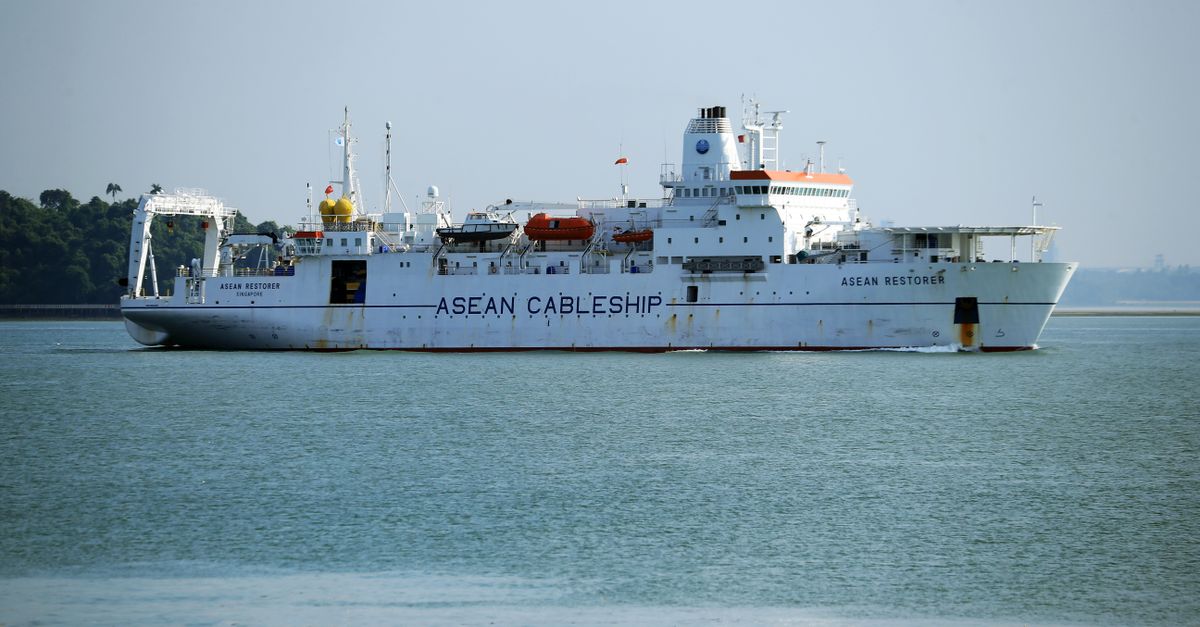
The Philippines holds the ASEAN chairmanship through 2026, hosting over 650 meetings and two summits under the theme "Navigating Our Future, Together," and one line inside the bloc's grid plans should catch anyone squinting at a power bill: an undersea cable from Sabah in Malaysia to southern Palawan. The pitch is clean electricity moving where it is needed, cheaper than firing another diesel plant. The catch sits in the numbers a JICA study already ran, and in the fact that this cable lands nowhere near the Luzon system.
Start with geography, because the summit language blurs it. The interconnection under study runs from Kudat in Sabah to Bulliluyan in southern Palawan, and even the cable length is unsettled: Sabah reporting has cited roughly 87 kilometers, while other regional reporting puts the submarine run at 186 km. Palawan is not tied to the Luzon grid at all, and remains under off-grid missionary electrification until a link to the national system is built.
The wire prices dearer before it prices anything cheaper
Here is the number the brochures skip. JICA's Study on ASEAN Power Grid Final Report, dated June 2025, calculates the transmission and distribution charge needed for a 6% return at US$0.0621 per kilowatt-hour for Sabah-Palawan, against US$0.005 for Batam-Singapore and US$0.0011 for Sarawak-Brunei. The report ties that gap to a plain cause: a long transmission line combined with a small volume of power trade.
Transmission is a regulated pass-through in the Philippines, so a wire this expensive per unit tends to show up as a fixed charge tied to the asset, collected on a schedule set by regulators, not by how much foreign power actually flows. Spread thin over few kilowatt-hours, the cost of the hardware lands on ratepayers whether the imported power turns out cheap or not.
Cheap power still needs an owner and a lender
The savings depend on Malaysia selling surplus at a price that beats building the same capacity at home, and that surplus is not guaranteed for the life of the asset. If the export price drifts up over the years, ratepayers keep carrying a fixed wire charge on power that stopped being the bargain that justified the cable. A regulated pass-through does not renegotiate itself when the deal sours.
Then there is the question ASEAN meetings keep soft: who lends the money and builds the hardware. The Sabah-Palawan interconnection sits at study stage under BIMP-EAGA and the wider ASEAN framework, with financing named publicly as the unresolved obstacle, since Sabah's utility and Palawan authorities have been described as unable to fund the submarine cable themselves. No lender or contractor has been publicly named. Regional infrastructure of this scale routinely draws bids from export lenders offering fast timelines and cheap capital, the same package now stamped on ports and rail. A financing line does not read as geopolitics on your statement. It reads as a repayment schedule attached to a charge.
None of this makes interconnection a bad idea. A bloc that shares power can smooth the shocks that send Batangas diesel and your electric bill lurching every time a chokepoint twitches. The problem is sequence and cost. Palawan needs its own tie to the national grid first, and NGCP has already filed with the Energy Regulatory Commission for Stage 1 of the Palawan-Mindoro Interconnection Project, an estimated PHP 6.4 billion of preparatory work covering feasibility and hydrographic survey plus a 230kV backbone and substation, roughly 27 months for the survey and 60 months for the backbone before the actual submarine cable in Stage 2 even proceeds.
Before officials sign onto the Sabah cable, the receipt worth demanding is plain: how that US$0.0621 per kilowatt-hour lands on a Palawan household, who holds the debt on the hardware, and the clause that protects ratepayers if Malaysian power stops being cheap. Approve the priciest wire in the study without that, and you have bought a premium with no floor on the payout.


