Subscribe to Our Newsletter

Success! Now Check Your Email

To complete Subscribe, click the confirmation link in your inbox. If it doesn’t arrive within 3 minutes, check your spam folder.

Ok, Thanks
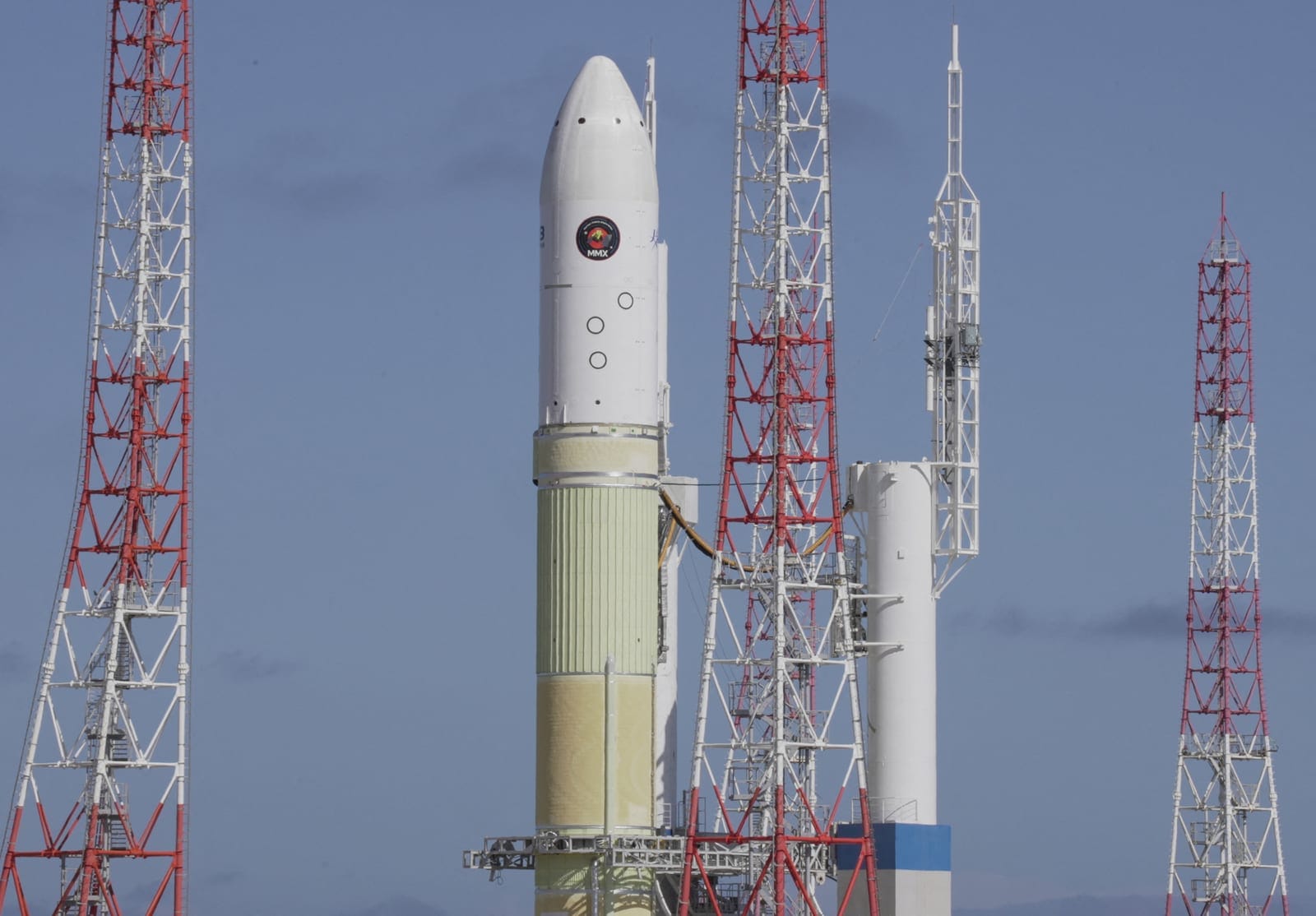
The H3 rocket carrying the Martian Moons Exploration (MMX) rover bound for Mars' moon Phobos lifts off from the Tanegashima Space Center in Minamitane
Photo: Reuters © Thomson Reuters

Japan Sends a Spacecraft to Grab the First Samples From a Mars Moon

JAXA's Phobos mission launched before dawn from Tanegashima, aiming to collect at least 10 grams of surface material and return it to Earth by 2031.

Spillr Newsdesk profile image
by Spillr Newsdesk

MINAMITANE, Japan, Oct 20 (Reuters) - Japan launched an uncrewed spacecraft toward the Martian moon Phobos on Tuesday on a mission intended to become the first to collect samples from the small rocky body and return them to Earth for analysis.

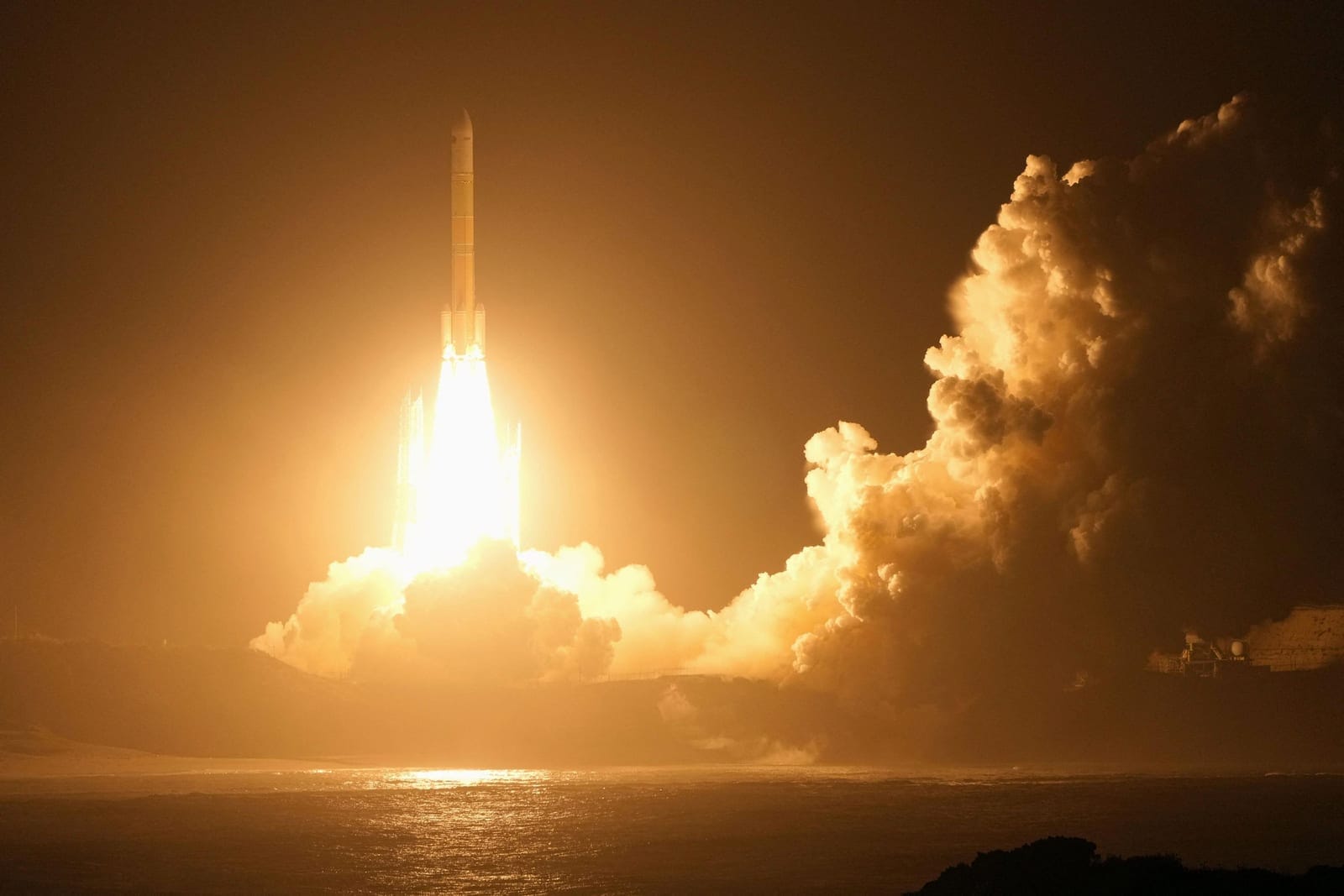
The Japan Aerospace Exploration Agency's Martian Moons eXploration spacecraft lifted off aboard an H3 rocket before dawn from the Tanegashima Space Center in southwestern Japan.

The spacecraft is expected to reach Mars in August 2027 and return samples to Earth in 2031. JAXA hopes the mission will shed light on the origin of the two moons of Mars and deepen the understanding of our solar system's early stages.

Phobos, the larger of the two Martian moons, orbits the planet three times a day. Phobos has an irregular shape with dimensions of about 27 km by 22 km by 18 km (17 miles by 14 miles by 11 miles), and orbits roughly 6,000 km (3,700 miles) above the Martian surface. 

JAXA aims to collect at least 10 grammes of material from its surface and return it to Earth for analysis.

The launch marked the first interplanetary mission for Japan's H3 rocket. The country's flagship launcher experienced a high-profile failure on its inaugural flight in 2023 when its second-stage engine failed to ignite, but has since completed a series of mostly successful launches.
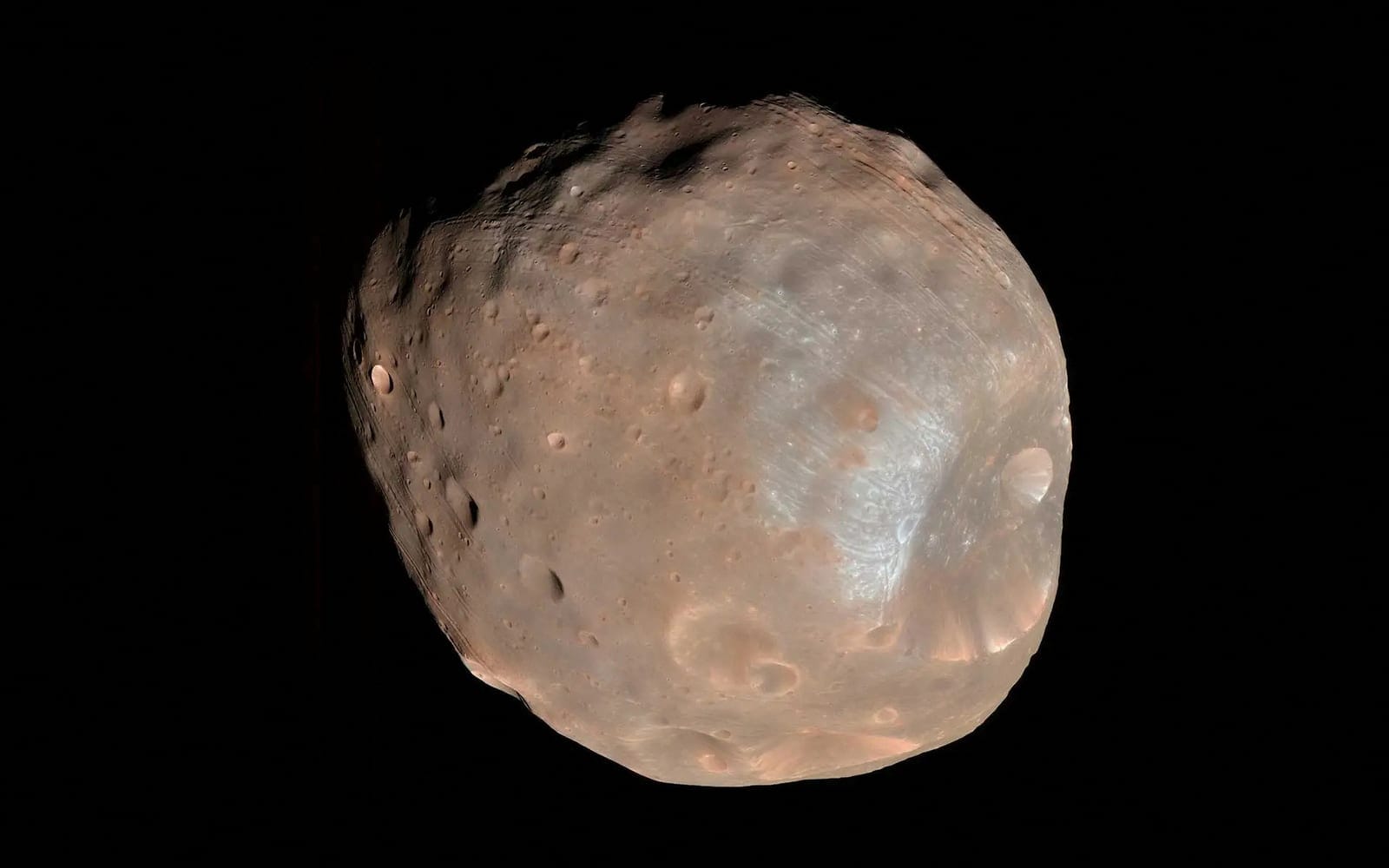
Phobos, the larger of Mars' two moons, is seen in this undated image taken by NASA's High Resolution Imaging Science Experiment (HiRISE) camera on the Mars Reconnaissance Orbiter. NASA/JPL-Caltech/University of Arizona/Handout via REUTERS REUTERS/NAS
Phobos, the larger of Mars' two moons, is seen in this undated image taken by NASA's High Resolution Imaging Science Experiment (HiRISE) camera on the Mars Reconnaissance Orbiter. NASA/JPL-Caltech/University of Arizona/Handout via REUTERS REUTERS/NASA/JPL-Caltech/University of A
The H3 rocket carrying the Martian Moons Exploration (MMX) rover bound for Mars' moon Phobos lifts off from the Tanegashima Space Center in Minamitane, Kagoshima Prefecture, Japan, October 20, 2026 in this photo taken by Kyodo. Kyodo/via REUTERS REUT
The H3 rocket carrying the Martian Moons Exploration (MMX) rover bound for Mars' moon Phobos lifts off from the Tanegashima Space Center in Minamitane, Kagoshima Prefecture, Japan, October 20, 2026 in this photo taken by Kyodo. Kyodo/via REUTERS REUTERS/KYODO
The H3 rocket carrying the Martian Moons Exploration (MMX) rover bound for Mars' moon Phobos rolls out to the launchpad ahead of its expected launch at Tanegashima Space Center on the southwestern island of Tanegashima, Kagoshima Prefecture, southwes
The H3 rocket carrying the Martian Moons Exploration (MMX) rover bound for Mars' moon Phobos rolls out to the launchpad ahead of its expected launch at Tanegashima Space Center on the southwestern island of Tanegashima, Kagoshima Prefecture, southwestern Japan October 19, 2026. REUTERS/Tom Bateman

(Reporting by Tom Bateman in Minamitane and Daniel Leussink in Tokyo; Editing by Will Dunham)

Spillr Newsdesk profile image
by Spillr Newsdesk

Subscribe to New Posts

Fresh Philippine stories straight to your inbox, free, no spam, unsubscribe anytime.

Success! Now Check Your Email

To complete Subscribe, click the confirmation link in your inbox. If it doesn’t arrive within 3 minutes, check your spam folder.

Ok, Thanks

Read More