
Germany and South Korea Strike Defense Pact, Citing Russia-North Korea Ties
Seoul and Berlin agreed to expand defense cooperation and plan a deal on protecting classified military information, warning that European and Asian security are now linked.


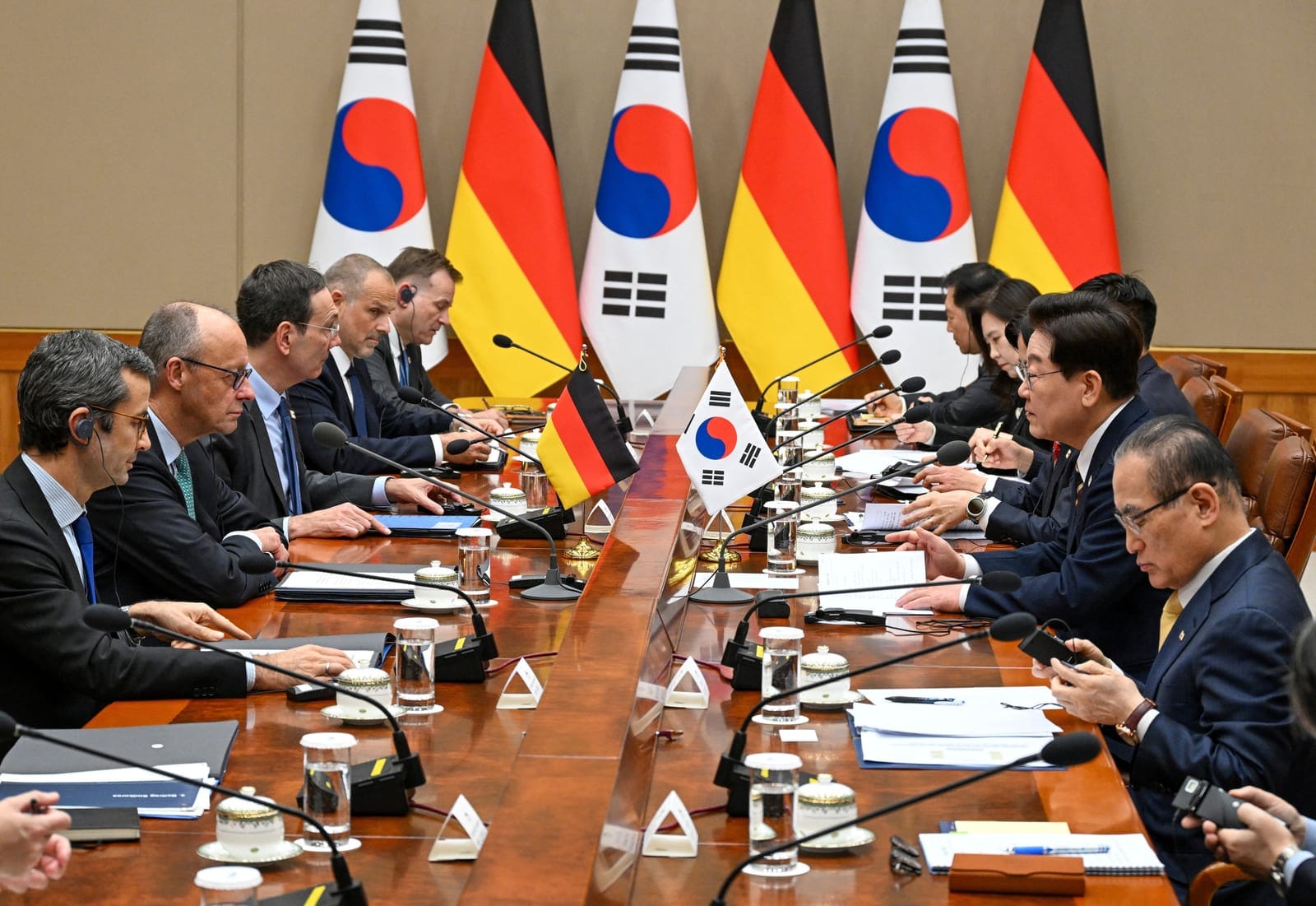
SEOUL, Oct 29 (Reuters) - Germany and South Korea set out an enhanced security partnership on Thursday, arguing that growing cooperation between Moscow and Pyongyang showed that European and Asian security were increasingly intertwined.
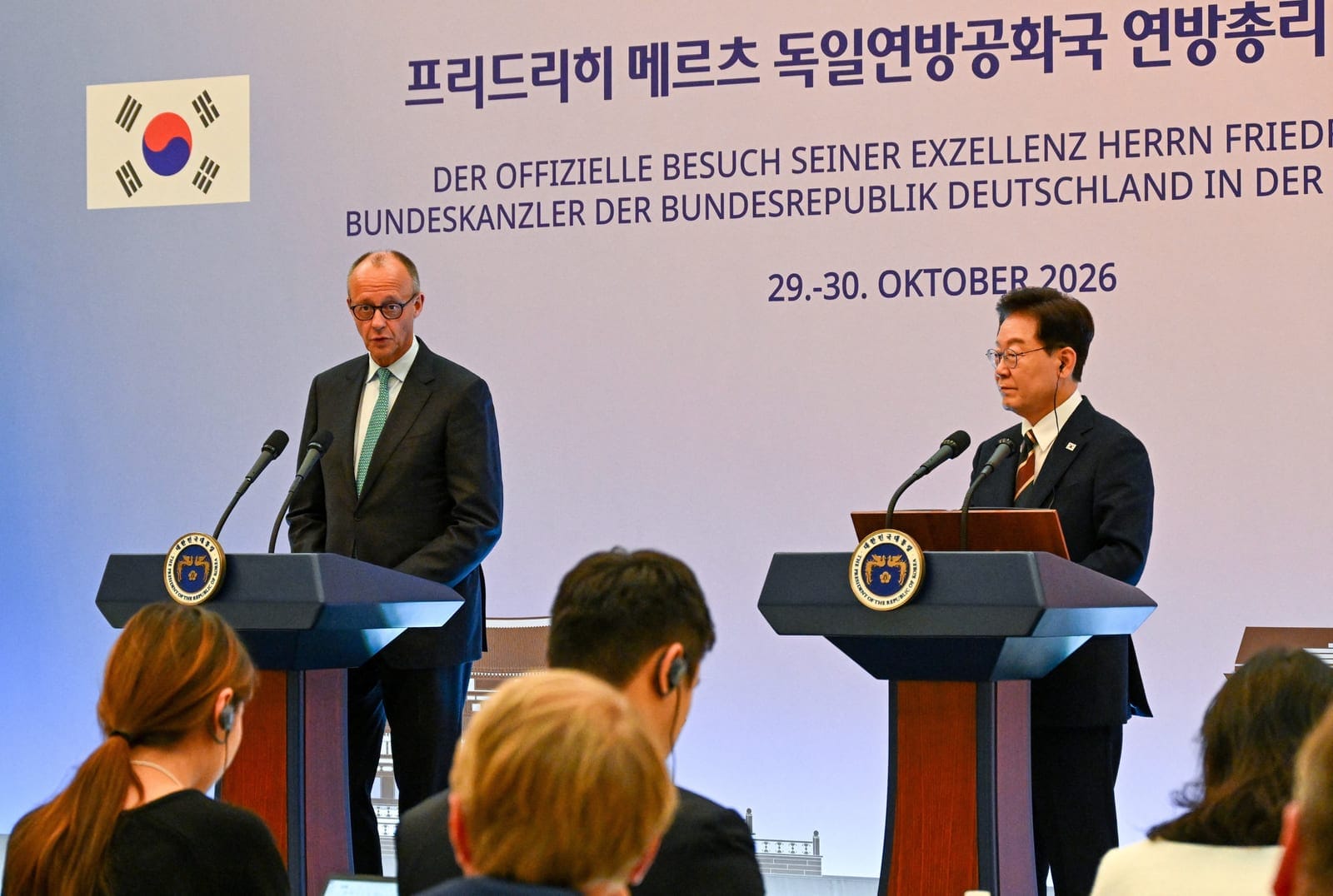
At a summit in Seoul the two governments agreed to expand cooperation in defence and security, South Korean President Lee Jae-myung said, adding that they planned to conclude an agreement on the protection of classified military information.
"Korean defence companies have great interest in long-term partnerships with Germany, including joint ventures and joint development projects," Lee said.
German Chancellor Friedrich Merz said the deployment of North Korean troops to fight against Ukraine underlined how conflicts were no longer confined to one region.
"The world has truly become small – even in times of war," added Merz, who is due to visit the heavily fortified Demilitarised Zone (DMZ) dividing the two Koreas on Friday.
The announcement comes as Western governments warn that military cooperation between Moscow and Pyongyang has deepened since Russia's invasion of Ukraine, raising concerns that North Korea could gain advanced military technology in return for its support.
Since 2024, North Korea has sent more than 10,000 troops to fight alongside Russians, as well as weapons to replenish Moscow's dwindling armoury, while gaining valuable battlefield experience, South Korea's intelligence agency has said.
South Korea is the final stop on Merz's week-long trip to Asia, which has also taken him to Singapore and Japan.
During the tour, he has sought to strengthen defence ties and promote closer economic cooperation among like-minded countries as a counterweight to U.S. tariff policies and China's state-backed industrial expansion.
(Reporting by Andreas Rinke and Heejin Kim; Writing by Miranda Murray; Editing by David Holmes)


